
Best Waterproof Coating for an Old Concrete Fish Pond
A concrete fish pond can look solid and still lose water. Sometimes the level drops so slowly that you barely notice it. You refill the pond, blame the hot weather, and move on. A few days later, it is low again. Then you spot a damp patch beside the pond wall or notice that an old crack looks darker than the surrounding concrete. At that point, most pond owners start searching for the leak.
The problem is that the place where you see moisture is not always where the water is getting out. Water may enter a hairline crack, move through the concrete, and appear somewhere else. An older pond may also have several small weak areas rather than one obvious hole.
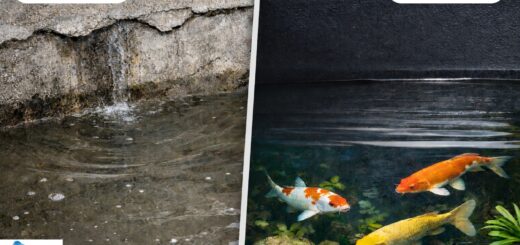
When the concrete structure is still sound, replacing the entire pond may be unnecessary. A properly applied pond coating can cover the prepared surface and create a continuous waterproof membrane across the floor, walls, corners, shelves, and repaired areas.
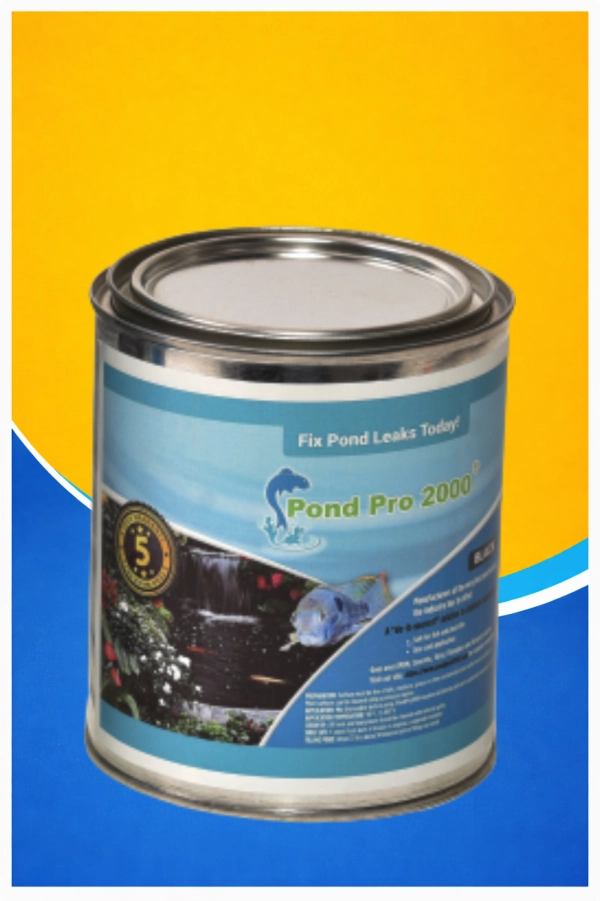
Pond Pro 2000 is made for existing concrete ponds. It is applied as a liquid, follows the shape of the pond, and does not require a separate primer or second coat when the surface has been prepared correctly.
Why an Old Concrete Pond May Start Losing Water
Concrete is durable, but a pond is a demanding environment. The surface remains underwater for long periods. It is also exposed to sunlight, changing temperatures, seasonal weather, and, in colder areas, repeated freezing and thawing. Over time, small cracks can form. Previous repairs may loosen, and older coatings can begin separating from the concrete.
Some leaks are easy to identify. You may see a visible crack or a section of caulk that has pulled away. Others are less obvious. A worn area may allow water to pass through without leaving a large opening that can be seen from above. That is one reason repeated patching does not always solve the problem.
You repair one crack, refill the pond, and everything seems fine for a while. Later, the water begins dropping again because another weak area was missed. For an aging pond with several repairs, coating the full prepared surface may provide a more complete solution than continuing to chase individual leaks.
A full pond repair still begins with fixing damaged areas. The coating should go over stable concrete, not hide loose material or major structural problems.
Is a Patch Enough?
A small, isolated crack may only need a local repair. If the rest of the pond is in good condition and you are confident that there is only one leak, patching that area may be reasonable. Older concrete ponds are not always that simple.
There may be hairline cracks in several places. The old surface may have become porous, or a previous coating may be failing around the edges. Water can also escape around pipes, steps, corners, shelves, or joints where two sections meet. Using a complete pond sealant system allows the repaired areas and the surrounding concrete to work together as one waterproof surface.
Pond Pro 2000 is a liquid material, so it can be rolled and brushed into areas where a sheet liner would be difficult to fit. It follows curved walls, irregular corners, vertical sections, and built-in pond features without creating liner seams.
Previous coatings do not always need to be removed completely. Material that is still firmly attached may remain. Anything loose, peeling, brittle, or poorly bonded should come off before the new coating is applied.
Check the Pond Before Buying Coating
Drain the pond and move the fish and plants into an appropriate temporary container. Do not begin coating while aquatic life is still inside the basin. Once the pond is empty, take time to inspect it properly. This is easier to do when you are not rushing to begin the application.
Look at the floor first, then work your way around the walls. Check the corners, steps, shelves, pipe openings, previous patches, and any area where the concrete changes direction.
Pay attention to:
- Loose or peeling coating
- Open cracks
- Crumbling concrete
- Old caulk
- Damp spots
- Weak patches
- Gaps around pipes and fittings
Pond Pro 2000 can waterproof a stable concrete surface, but it is not intended to rebuild a failing pond structure. Large cracks, serious movement, loose concrete, or damaged walls should be repaired before coating.
Fresh concrete must also be fully dry. The same rule applies to an older pond after it has been drained and cleaned. Concrete can hold moisture longer than it appears to, particularly in cracks, corners, and low areas.
Cleaning Takes Longer Than Most People Expect
An empty pond rarely looks as dirty as it actually is. Algae may remain in the pores of the concrete. Fine dirt settles into corners. Loose particles collect around old repairs, and residue can stay on the walls even after the pond has been rinsed.
The surface needs to be clean enough for the new coating to bond directly to stable concrete or firmly attached existing material.
When fish and plants are part of the pond, Pond Pro recommends cleaning with water and a soft-bristle brush. Detergents should generally be avoided because residue could remain behind and affect aquatic life after the pond is refilled.
Scrub the floor, walls, curves, ledges, and corners rather than cleaning only the areas that look stained. A scraper or wire brush can be used to remove loose coating and weak material.
Do not remove a well-bonded previous coating simply because it is old. The important question is whether it is still attached. If the edge lifts or flakes away when scraped, it should not remain beneath the new membrane.
After cleaning, rinse the pond and allow it to dry completely.
This part should not be rushed. A sunny floor does not mean every area is dry. Moisture can remain inside a crack or beneath an old patch long after the main surface looks ready.
Repair the Weak Areas First
Remove loose caulk and replace it with compatible Pond Pro caulk. Open cracks and joints also need to be repaired before the main coating is applied.
Check the edges around older repairs. If a patch is lifting, remove the unstable section rather than coating over it.
The surface does not need to look perfect. An old pond will probably still show signs of age after cleaning. That is fine. What matters is that the concrete is clean, dry, and stable.
This preparation work may take more time than the actual coating. That is not unusual. Rolling the material is often the simplest part of the project.
Mix the Material Thoroughly
Pond Pro 2000 should be mixed with a drill and a gallon mixer attachment for approximately three to four minutes.
While mixing, create a vortex in the container. Move the mixer around the can and up and down so that material from the sides and bottom is blended evenly. A quick stir with a stick is not the same thing.
Proper mixing helps keep the material consistent while it is being applied. That matters when you are covering floors, vertical walls, curves, and detailed areas with the same product.
Roll the Open Areas and Brush the Details
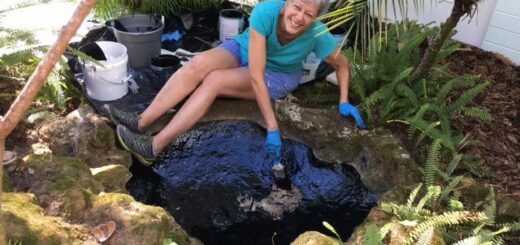
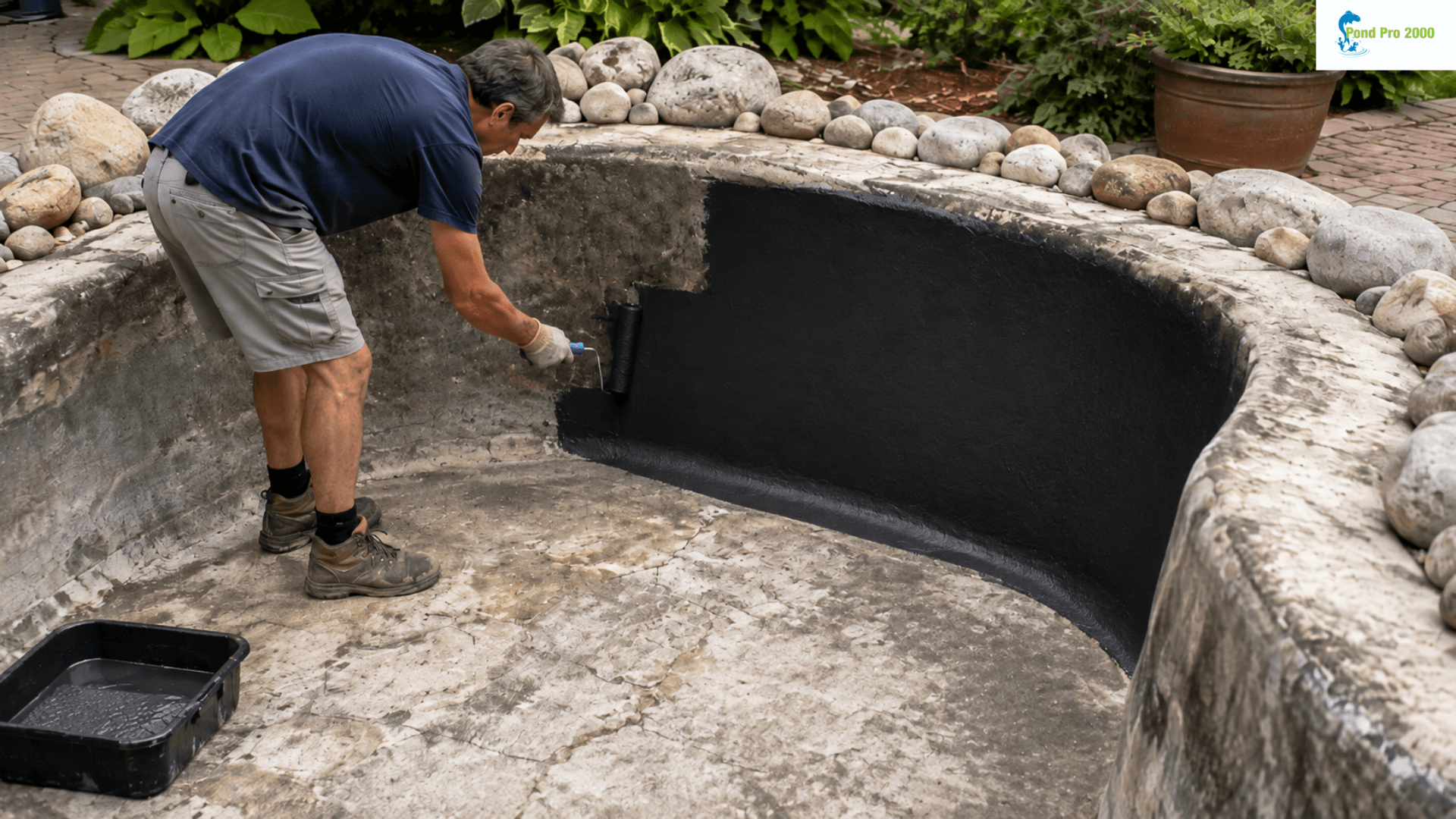
For large sections, pour the material in an “S” pattern and spread it using a 3/8-inch nap roller.
A good-quality paintbrush is useful around corners, steps, pipes, shelves, curves, and vertical sections. These areas are easy to miss when you are concentrating on the pond floor.
Work in a clear direction so you know which sections have been completed. On an irregular pond, it can help to finish one wall or feature at a time rather than moving randomly around the basin.
The concrete application information lists approximate coverage of 40 square feet per gallon.
When measuring the pond, include every surface that will be coated. The floor is only part of the total area. The walls, steps, ledges, shelves, and built-in features can add a surprising amount of square footage.
Rough concrete may also use more material than a smooth surface. Trying to stretch one gallon too far can leave the finished membrane thinner than intended.
Pond Pro 2000 is not meant to be rolled out like a thin decorative paint. The concrete page describes a one-coat application at approximately 30 mils. As the material cures, it chemically cross-links and bonds to the prepared surface.
Do Not Refill the Pond Too Soon
Once the application is complete, the pond needs time to cure. The freshly coated surface should not get wet during the first two to three hours. Daytime temperatures should remain within the range recommended in the product instructions, with the concrete application information recommending temperatures above 55°F for curing.
The website provides two slightly different curing references. The concrete product page mentions a minimum of 24 hours above 55°F, while the general application instructions recommend waiting a full 48 hours before adding water, provided it has not rained.
For a fish pond, waiting the longer 48-hour period is the safer approach. The current instructions and label included with the product should always take priority.
Cool weather can extend the process. When temperatures fall below the recommended level, add that time to the overall curing period. Do not refill the pond merely because the surface feels dry. A coating may feel dry on top before the curing process has finished underneath.
Pond Pro 2000 is described as non-toxic to fish and plants once it has cured. That final part matters. Fish and plants should only be returned after the full curing period is complete.
A Few Shortcuts That Usually Cause Problems
Applying the coating over damp concrete is one of the biggest mistakes. Loose material, algae, dirt, peeling coating, and detergent residue can also interfere with adhesion.
Another common issue is underestimating the surface area. A pond that appears small from above may have deep walls, shelves, curves, and other sections that require additional material.
Do not use the coating to cover serious structural damage. Repair unstable concrete first. Finally, give the coating time. Refilling early may undo the care taken during cleaning, repairs, mixing, and application.
An Old Pond May Not Need to Be Replaced
A leaking concrete pond can be frustrating, particularly when the water loss keeps returning after small repairs. Still, an old pond is not automatically beyond saving.
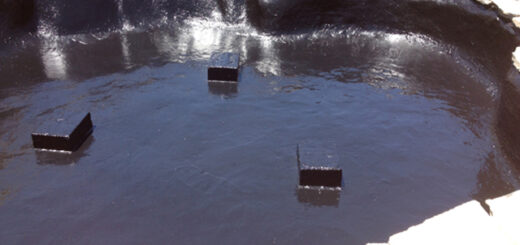
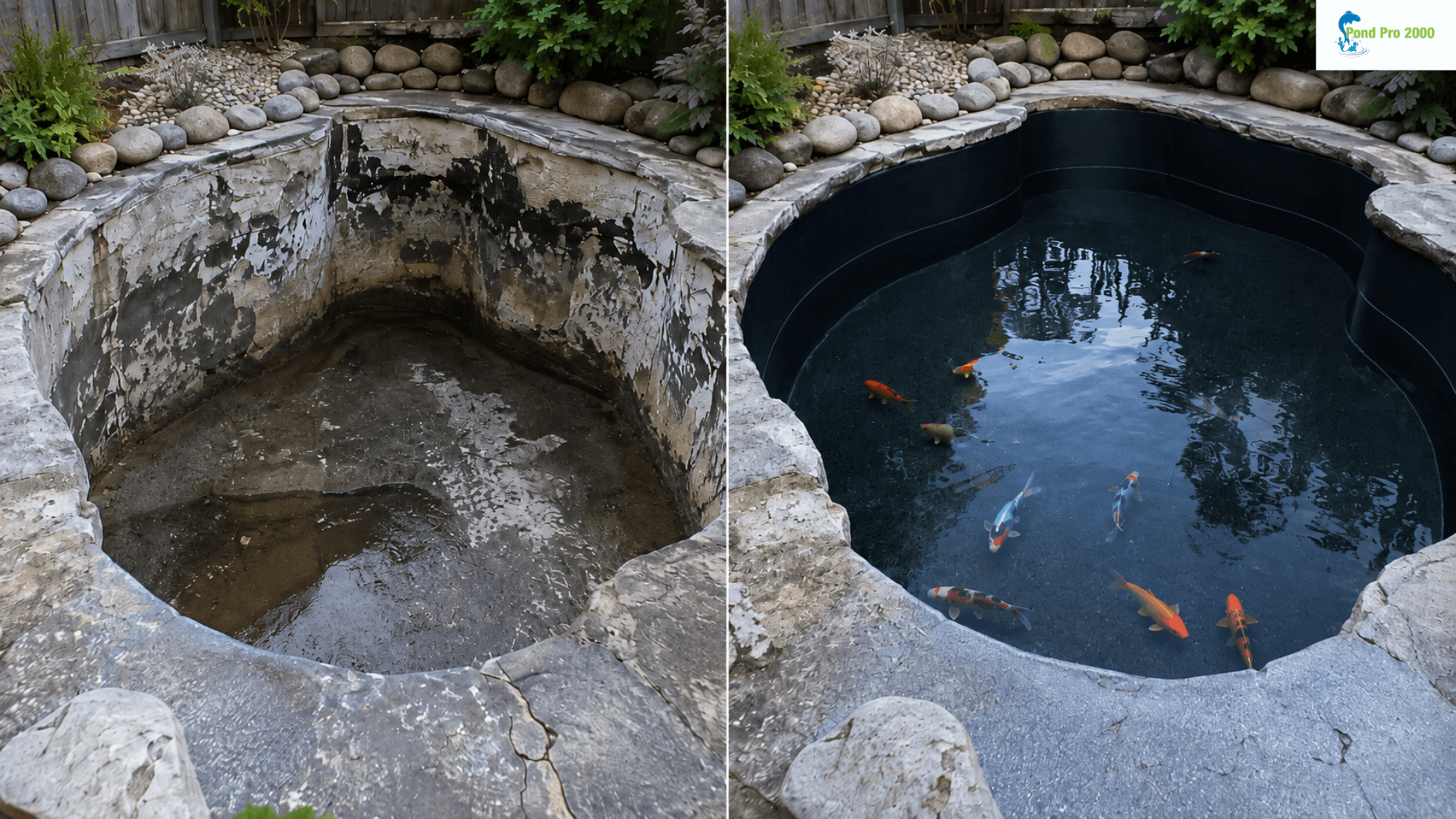
If the concrete basin remains structurally sound, Pond Pro 2000 can be used to create a seamless waterproof surface over properly prepared concrete. The process is straightforward, but each stage matters: drain the pond, inspect it, clean it carefully, remove loose material, repair the weak areas, mix the product thoroughly, apply it at the correct coverage, and allow it to cure.
The coating itself cannot make poor preparation disappear. What it can do is provide a continuous membrane across stable concrete, repaired cracks, corners, shelves, walls, and other vulnerable areas.
That can give an aging fish pond a fresh waterproof surface – and save you from topping off the water every few days while wondering where it is going.