
DIY Pond Leak Repair: Fish-Safe, Self-Sealing Products for Concrete Ponds
You filled your pond over the weekend, but by Monday morning, the waterline had dropped again. At first, it may not seem serious. Hot weather can cause evaporation, and waterfalls sometimes splash more water outside the pond than expected. But when you keep reaching for the garden hose every few days, there is a good chance the pond has developed a leak.
Concrete ponds can lose water through visible cracks, worn joints, porous areas, plumbing openings, or an older coating that has started to separate. The challenge is that the most noticeable crack is not always the only place where water is escaping.
That does not mean the pond needs to be demolished or rebuilt. Many leaks can be handled as a weekend DIY project with careful preparation and the right pond sealant.
For homeowners with koi, goldfish, aquatic plants, frogs, or turtles, product safety matters just as much as stopping the leak. The coating must create a dependable waterproof barrier without harming pond life once it has fully cured.
Start by Confirming Where the Water Is Going
Before draining the pond, make sure the concrete shell is actually responsible for the water loss. Inspect the pump, filter, skimmer, hoses, plumbing connections, waterfall, and fountain equipment. A loose fitting can release a surprising amount of water. Waterfalls may also send small splashes outside the pond throughout the day, especially when wind is involved.
Turn off the water features and mark the waterline with a piece of tape or chalk. Check it again several hours later or the following morning.
When the level continues to fall with the equipment turned off, the leak is more likely to be in the pond itself. Pay attention to where the water stops dropping. That level may help you narrow down the damaged area.
Still, do not assume one visible crack tells the whole story. Concrete can become porous over time, and water may seep through tiny openings that are difficult to see. A complete pond repair should address the entire prepared surface, not just one obvious spot.
Why Concrete Pond Repairs Need Flexibility
Concrete may feel completely solid, but an outdoor pond is always exposed to changing conditions.
In northern states, repeated freezing and thawing can place stress on the pond shell. In warmer parts of the country, intense sunlight and high temperatures can affect exposed surfaces. Soil movement, settling, rain, and seasonal temperature changes may also cause small amounts of movement.
A rigid patch can eventually separate when the concrete underneath shifts. A flexible coating is better able to move with the surface.
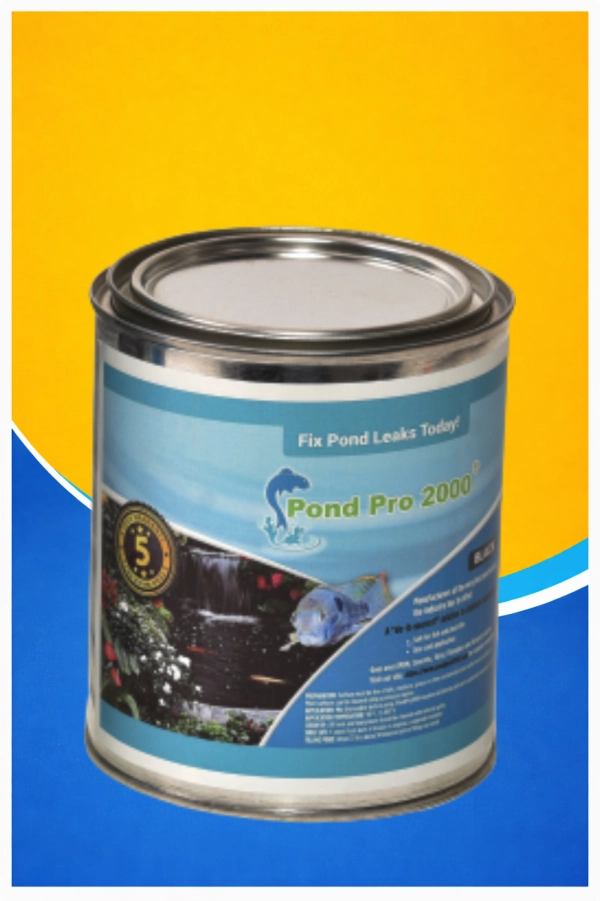
Pond Pro 2000 uses butyl rubber chemistry and is designed for continuous water immersion. The cured coating has high elongation, which allows it to remain flexible while maintaining the waterproof barrier.
It is also made to resist ultraviolet exposure and changing outdoor temperatures. These qualities are especially important for backyard ponds that remain outdoors throughout the year.
Is Pond Pro 2000 Safe for Koi and Other Fish?
For most pond owners, this is the first question they ask. Pond Pro 2000 is described as safe for fish, aquatic plants, frogs, turtles, and tadpoles after it has completely cured. The words “after it has completely cured” matter.
Fish and plants should be removed before the pond is drained and repaired. Place them in a suitable temporary holding tank or container with clean water, proper aeration, and enough room to remain comfortable during the project.
Do not return fish while the coating is wet, soft, tacky, or still curing. Once fully cured, the product forms an inert rubber membrane.
According to the application instructions, the pond should remain empty for at least 48 hours when temperatures are above 50°F, and no rain has reached the coating. Cool temperatures, shade, and high humidity can slow the process, so additional curing time may be necessary. It is better to wait longer than to refill the pond too soon and risk damaging the new surface.
Clean Concrete Is Essential
The quality of the final repair depends heavily on surface preparation. Drain the pond completely. Remove the fish, plants, rocks, pumps, lights, and any equipment that may interfere with cleaning or application. Clear out leaves, sludge, algae, dirt, and other debris.
Scrub the concrete with water and a stiff-bristle brush. Pond Pro’s instructions discourage using household detergents in ponds that will contain fish or plants. Soap residue can remain behind and may create problems after the pond has been refilled. Continue cleaning until loose dirt no longer transfers to your hand, brush, or roller.
Old coatings also need attention. Remove anything that is peeling, flaking, blistering, or poorly attached. A scraper and wire brush can help clear weak material from the surface. Existing coating that remains firmly bonded may be suitable to coat over, depending on its condition and compatibility. The concrete must be completely dry before applying the pond coating.
This step cannot be rushed. Concrete may look dry on top while still holding moisture inside its pores, cracks, or shaded corners. Applying the product over damp concrete can interfere with adhesion. New concrete must also be allowed to cure and dry properly before coating.
Applying Pond Pro 2000
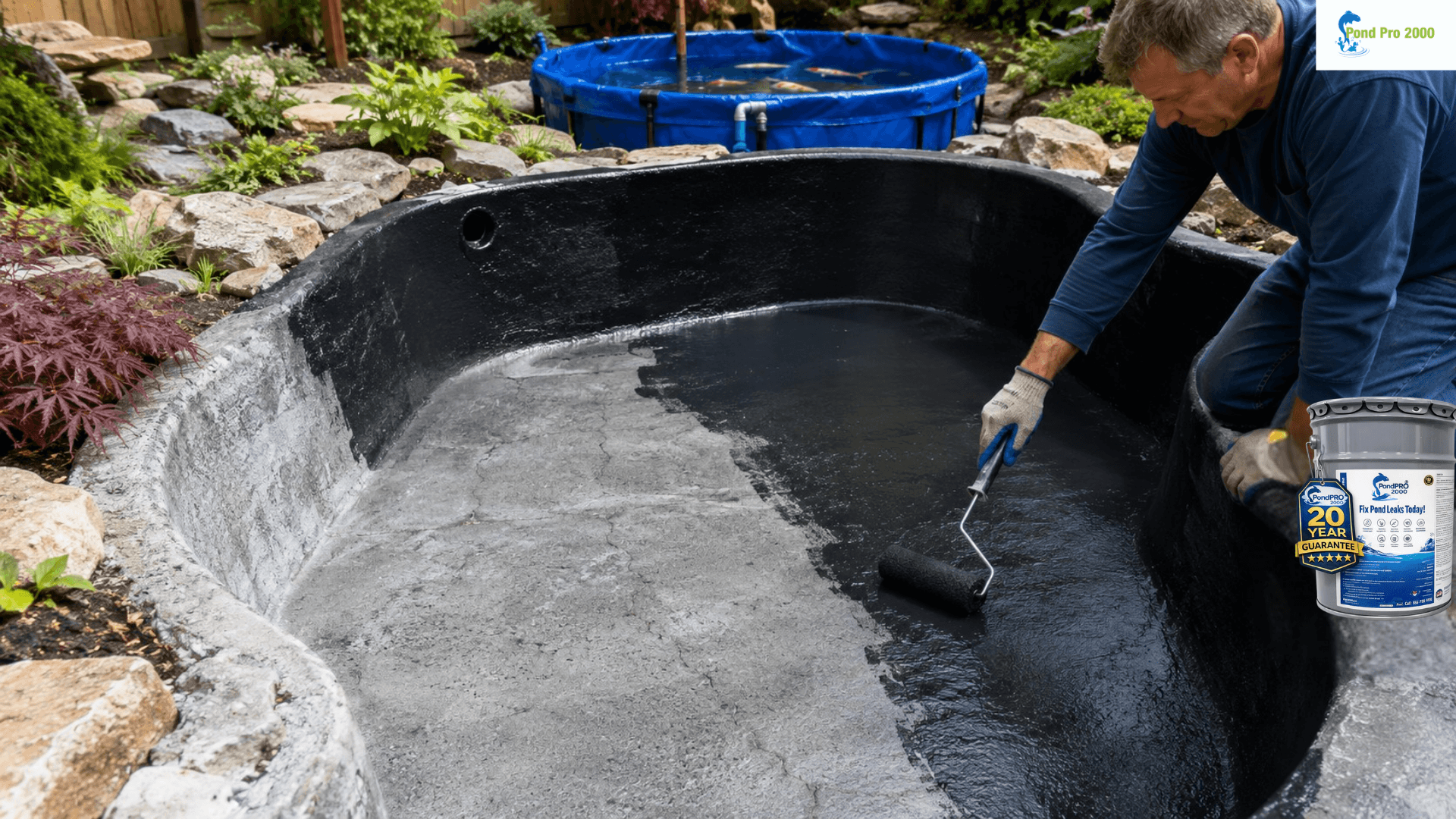
Pond Pro 2000 is designed as a one-coat system for existing concrete ponds. A separate primer is generally not required on a properly prepared original concrete surface.
Wait until the pond is fully cleaned, repaired, and dry before opening the container. Mix the product with an electric drill and mixer attachment for approximately three to four minutes. Move the mixer around the container, including near the sides and bottom, so the material is blended evenly.
For larger areas, pour the coating onto the surface in an “S” pattern and spread it with a 3/8-inch nap roller. Use a brush for walls, corners, edges, pipe openings, and other detailed sections.
On a smooth surface, one gallon covers approximately 40 square feet. Rough or highly porous concrete may require more material because the coating settles into the surface texture.
Measure the pond carefully before ordering. Include the floor, walls, steps, shelves, and any other areas that will remain underwater.
Avoid stretching the coating too far simply to increase coverage. The product must be applied at the proper thickness to create a durable rubber membrane. Applying a very thin coat may leave weak or uneven areas.
Pick the Right Weather Window
Weather conditions can make a major difference. The temperature should be above 50°F and rising during application. Warm, dry weather generally helps the coating cure more quickly. Cooler temperatures and high humidity may extend the curing period.
Check the local forecast before beginning. The concrete must stay dry while the product is being applied, and the finished coating needs enough rain-free time to cure.
Plan the repair for a period when you are not expecting storms, heavy morning dew, or sudden temperature drops.
The surface may begin to feel dry before the complete curing period has passed. That does not mean the pond is ready for water. Follow the recommended curing time rather than judging the coating only by touch.
A More Complete Solution Than Repeated Patches
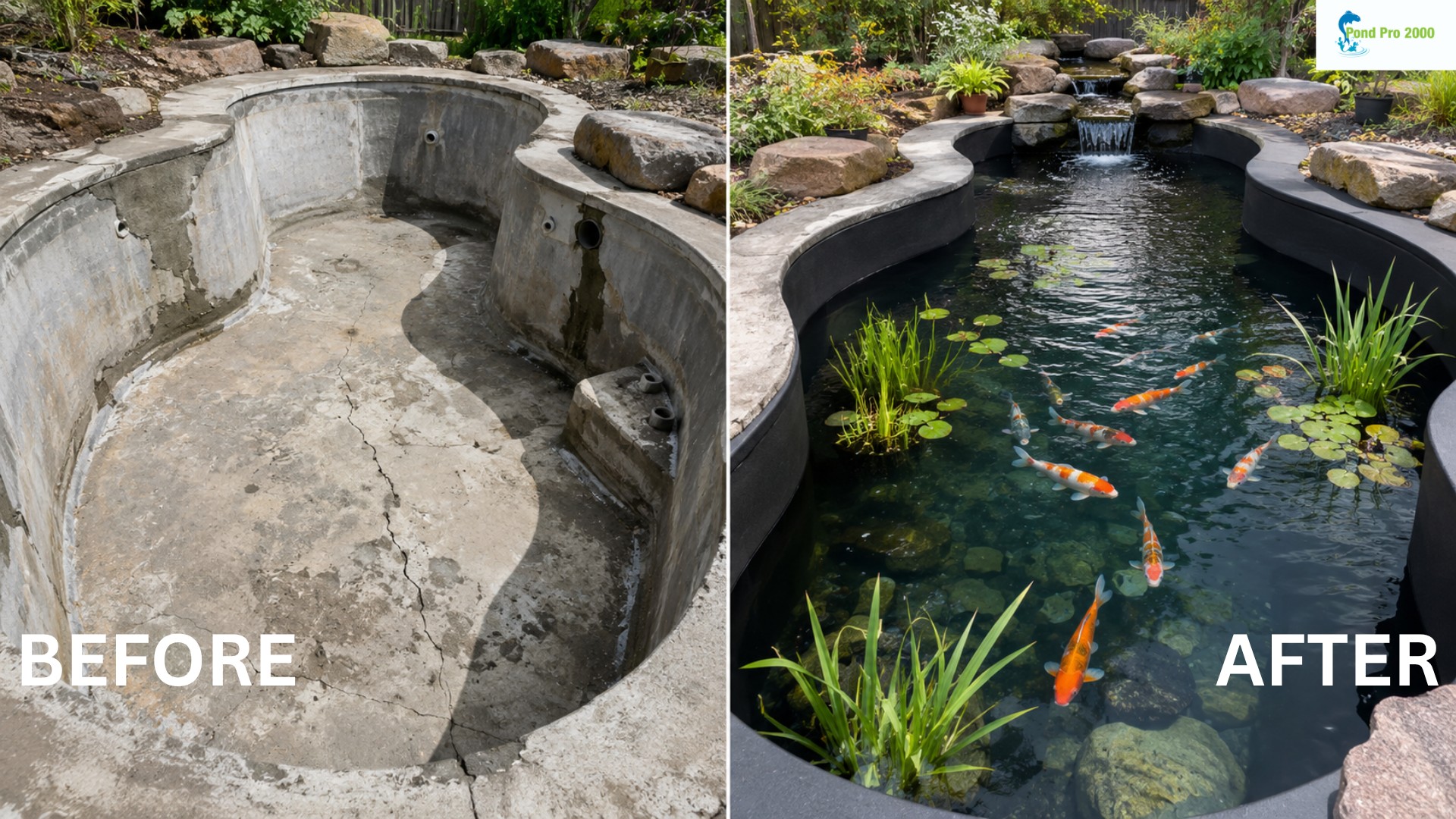
Repeatedly patching one crack at a time can become frustrating. You fix one section, refill the pond, and then discover another damp area a few weeks later. Eventually, the concrete may be covered with several different products that do not bond or move in the same way.
A seamless liquid rubber coating offers a broader approach. It covers the properly prepared pond surface and creates one continuous waterproof membrane rather than protecting only a single visible crack. The most important part of the project is still preparation.
Take the time to confirm the leak, protect the fish, clean the concrete thoroughly, remove weak material, repair larger cracks, and allow the surface to dry. Apply the product at the proper thickness and give it the full curing time before adding water.
Handled carefully, a DIY concrete pond repair can help you avoid the cost and disruption of rebuilding the entire pond. More importantly, it allows you to spend less time checking the water level and more time enjoying your backyard pond.