
Pond Leak Solutions: Long-Lasting Sealants and DIY Repairs
A leaking pond is one of those problems that starts small and then slowly becomes hard to ignore. One week the water level looks a little low. The next week, you are filling it again. Then you start checking the pump, the liner, the edges, the waterfall area, and every little crack you can find.
The frustrating part is that pond leaks are not always obvious. Water can escape through a tiny tear in a liner, a crack in concrete, a weak seam, or even an old patch that has started to fail. Sometimes the leak is right in front of you. Other times, you only notice the result: lower water, exposed edges, stressed plants, or a pond that just does not hold the way it used to.
The good news is that many pond leaks can be repaired without completely rebuilding the pond. With the right preparation and the right sealant, a pond owner can often handle the repair as a DIY project. That is where pond pro 2000 becomes useful. It is made for pond surfaces that need a flexible, waterproof coating and long-lasting protection.
First, Find Out What Type of Pond Problem You Have
Before you start any repair, take a little time to understand what is actually leaking. It sounds simple, but this step saves a lot of wasted effort.
If your pond has an EPDM liner, look for small holes, tears, folds, worn spots, and areas where the liner may have pulled or stretched. Corners and edges are common problem areas. So are spots around rocks, waterfalls, and folds in the liner.
If your pond is concrete, check for cracks, loose coating, rough patches, and places where water may have pushed into weak areas. Concrete ponds can leak through hairline cracks, especially if the surface has aged or moved over time.
PondPro 2000 can be used on several pond surfaces, including existing EPDM liners, concrete ponds, fiberglass liners, fountains, reflecting pools, and non-porous brick or mortar. It is important to note that it is not for PVC liners. If the surface is PVC, you will need a different solution.
Why Quick Patches Often Do Not Last
Many pond owners try the fastest fix first. A patch here. A bit of glue there. Maybe a small tube of sealant from the garage. Sometimes that works for a while, but pond leaks have a way of coming back when the repair is not strong enough.
The reason is simple. A pond is always under pressure from water. It also deals with sun, temperature changes, movement, moisture, and sometimes fish, plants, or wildlife. A quick patch may stop the leak today, but if the edges lift or the surface moves, the water will find another path.
That is why proper pond repair should not only cover the leak. It should create a sealed surface that can handle the pond environment after the repair is finished.
Surface Preparation Is Where the Job Really Starts
Most people want to jump straight to applying the coating. But preparation is what decides whether the repair will hold.
The pond surface needs to be clean, dry, and structurally sound. Any dirt, loose coating, wax, oil, algae film, or residue can get in the way of bonding. If the coating cannot bond well, it cannot protect the pond properly.
For ponds with fish or plants, avoid detergents because leftover residue may be harmful. A soft bristle brush and clean water are usually enough to remove surface dirt. If the pond does not currently have fish or plants, a cleaning solution may be used where needed, but the surface still needs to be rinsed well and allowed to dry fully.
Loose caulking should be removed and replaced with compatible butyl caulk. Old loose coating should be scraped or wire brushed away. If the pond has metal areas with rust, loose oxide should be removed before coating.
This part may not be exciting, but it is the part that makes the repair more dependable.
Choosing a Pond Sealant That Can Handle Water
Not every coating belongs in a pond. Some products are made for dry surfaces only. Some cannot handle continuous water exposure. Others may crack, peel, or soften after being submerged.
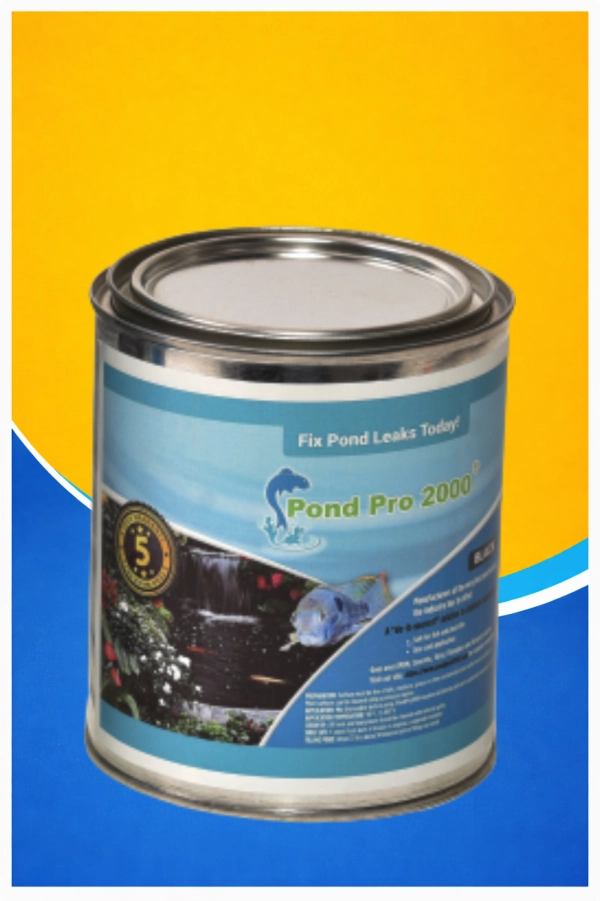
A good pond sealant needs to be flexible, waterproof, and strong enough to handle pond conditions after curing. Pond Pro 2000 is a Butyl Liquid Rubber coating designed to create a seamless waterproof membrane. It includes the catalyst in the can, so there is no separate catalyst to mix in. As it cures, it chemically cross-links and bonds to the surface.
That chemical curing process is important because it helps the coating become more than just a surface layer. Once cured, it forms a flexible membrane that helps seal the pond and protect the surface below.
A Practical Option for DIY Pond Owners
One of the biggest advantages of PondPro 2000 is that the application process is manageable for many pond owners. It is promoted as a one-coat system and does not require a primer on many approved surfaces.
For EPDM liners, the site recommends applying a light flash coat first. This helps reduce swelling before the main coat is applied. The flash coat should dry fully before the full application.
For concrete ponds, PondPro 2000 can be applied directly over existing concrete and over many previous coatings that are still firmly attached. Any loose coating must be removed first. If the surface is weak or peeling, coating over it will not solve the problem.
This makes PondPro 2000 useful for people who want to repair their pond without starting over from scratch.
How to Apply PondPro 2000
Once the pond is clean and dry, mix the product well with a drill and mixer attachment. Hand mixing is not recommended because the material needs to be evenly blended. The site recommends mixing for about 3 to 4 minutes.
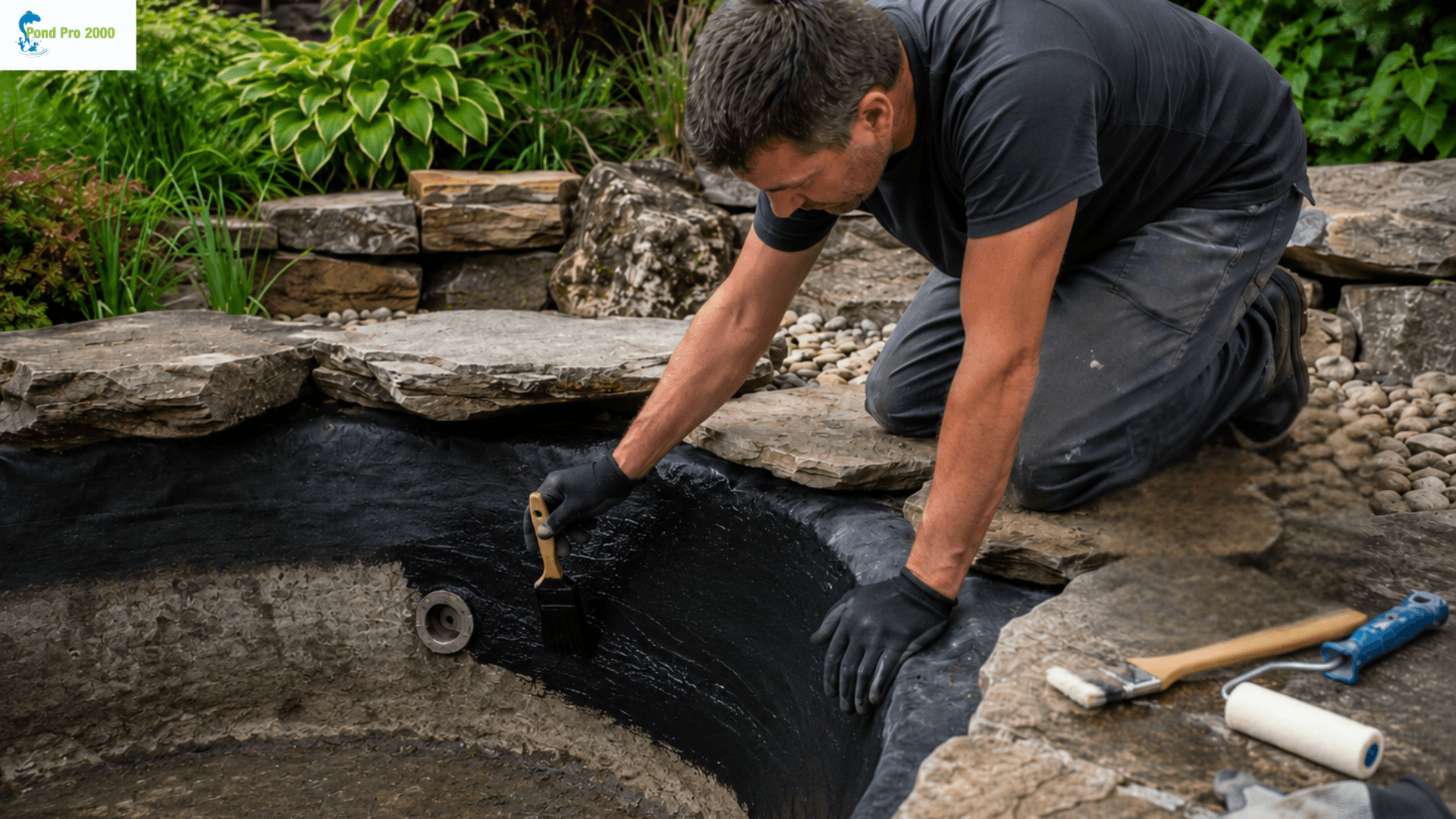
For larger open areas, a 3/8-inch nap roller works well. You can pour the coating in a figure “S” pattern and roll it across the surface. For corners, tight spots, vertical walls, small ponds, and detailed areas, a brush gives better control.
On smooth surfaces, coverage is generally about 40 square feet per gallon. Rougher surfaces may require more material, so it is always better to plan based on the actual condition of the pond.
Before applying the full coat, cracks, joints, and tears should be repaired with compatible products where needed. Larger gaps should not be ignored. Treat the weak areas first, then coat over them so the final surface is more continuous.
Do Not Rush the Cure Time
After coating, the pond needs time before it is filled again. This is one of the most important steps.
PondPro 2000 can waterproof within a few hours under the right conditions, but that does not mean the pond should be refilled immediately. The application instructions recommend waiting a full 48 hours on a day above 50 degrees before filling the pond, as long as it has not rained during that time.
If temperatures are lower, allow more time. If rain interrupts the curing period, the project may need extra drying time before the pond is ready.
It is tempting to refill the pond quickly, especially if you are trying to get fish or plants back in place. But waiting helps protect the coating and gives the repair a better chance to last.
Safe Once Properly Cured
Ponds are living spaces. Many have fish, plants, frogs, turtles, tadpoles, and other small wildlife. PondPro 2000 is described as safe for fish and plant life once it has properly cured.
That does not mean shortcuts are okay. The pond should still be cleaned correctly, free from detergent residue, coated according to instructions, and allowed to cure fully before water is added back. A careful process helps protect both the repair and the pond environment.
Final Thoughts
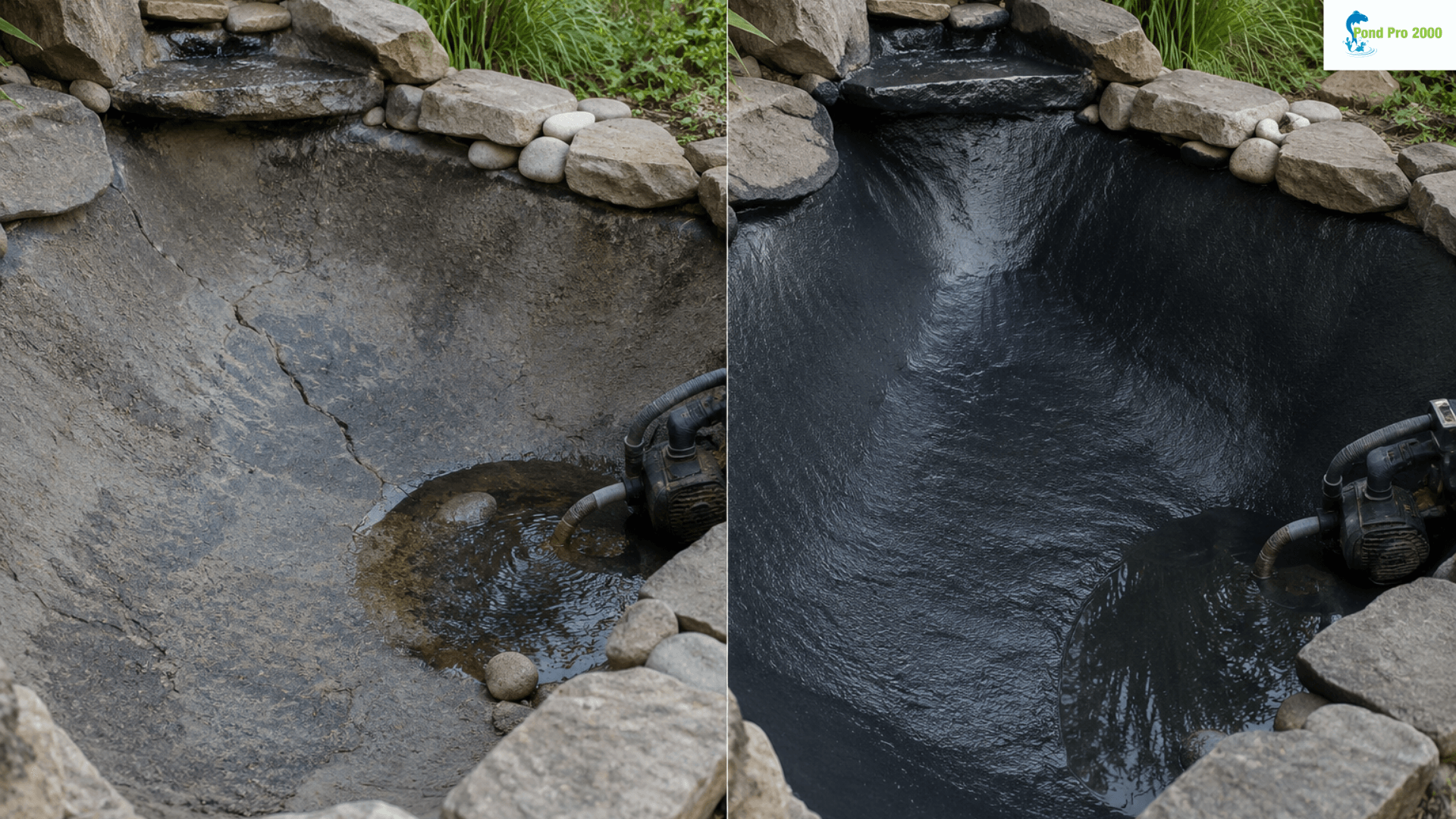
A pond leak can feel overwhelming, but it does not always mean the whole pond needs to be replaced. In many cases, the better answer is a careful inspection, proper cleaning, targeted repair, and a waterproof coating made for pond use.
Pond Pro 2000. gives DIY pond owners a practical way to repair compatible pond surfaces and create a flexible, seamless membrane. It can be used on EPDM liners, concrete ponds, fiberglass liners, fountains, reflecting pools, and other approved surfaces. With the right prep and cure time, it helps turn a leaking pond back into a water feature you can enjoy.
So before you keep topping off the pond again and again, take the time to find the leak, prepare the surface, and choose a sealant that is built for the job. A little patience during the repair can save a lot of frustration later.