
The Best pond and fountain sealant for EPDM and Concrete Pond Repairs
A pond rarely announces itself with one obvious crack. More often, you notice the water level looking slightly lower than usual. You refill it, thinking the loss may be from evaporation. A few days later, the same thing happens again. Soon, you are checking the pump, plumbing, waterfall, edges, and liner, trying to work out where the water is going. Whether you want to extend the life of your pond liner or concrete, or you have a leaking pond, Pond Pro 2000 is the solution. Finding the leak can be frustrating. Choosing the wrong repair product can make the situation worse, especially when koi, goldfish, plants, frogs, or other pond life are involved.
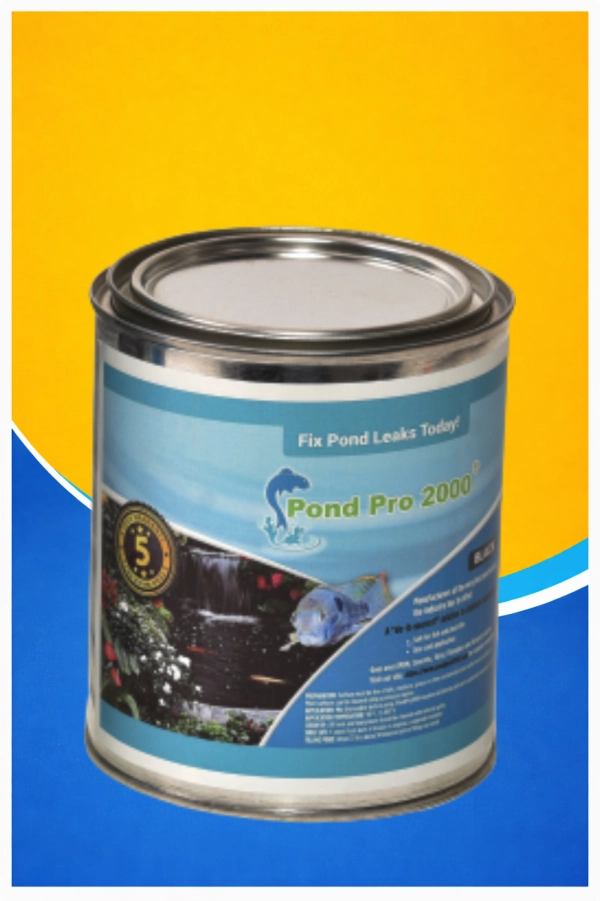
Pond Pro 2000 is a liquid butyl rubber coating made for repairing several common pond surfaces, including EPDM liners and concrete. It creates a seamless waterproof membrane and, once properly cured, is safe for fish and plant life.
A Pond Coating Needs to Do More Than Stop Leaks
A garden pond is different from a roof, basement wall, or ordinary concrete structure. Whatever you apply to the surface will eventually come into contact with the water where fish and plants live. That makes product selection especially important.
Some general-purpose waterproofing materials may seal a crack, but that does not automatically make them suitable for an aquatic environment. A proper pond sealant should be intended for pond use and applied according to the manufacturer’s instructions.
Pond Pro 2000 is designed to form a continuous rubber membrane over the prepared surface. Instead of covering only one visible crack or puncture, the coating can seal a wider area. This is useful because pond leaks are not always easy to pinpoint. A tiny split in a liner or a fine crack in concrete may be difficult to see, even after the pond has been drained. Coating the surface provides broader protection than guessing where to place a small patch.
Repairing an Existing EPDM Pond Liner
EPDM liners are flexible and widely used for ponds, but they are not completely immune to damage. Sharp stones, exposed roots, tools, animal activity, ageing, or movement beneath the liner can eventually create a weak spot.
When the damage is clearly visible, a small patch may seem like the simplest answer. The trouble is that some leaks are too small to find, while others occur in folded or awkward areas where patching is difficult.
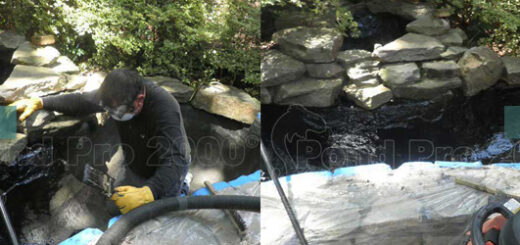
Pond Pro 2000 can be applied over an existing EPDM pond liner after the surface has been prepared correctly. As the liquid coating cures, it chemically cross = links and bonds to the liner, leaving a smooth, seamless membrane over the repaired section.
Before starting, however, confirm what type of liner you actually have. Pond Pro 2000 is compatible with EPDM, but it should not be used on PVC liners or silicone. Older pond owners do not always know which material was originally installed, and the two can look similar at first glance. It is worth checking before purchasing or applying any coating.
Why EPDM Liners Need a Flash Coat
Applying Pond Pro 2000 over EPDM involves a slightly different process from coating concrete. The manufacturer recommends beginning with a light flash coat. For an area of approximately 200 square feet, around 1.5 gallons of material is used to create a thin layer measuring roughly 6 = 8 mils.
This first layer must be allowed to dry fully. The recommended waiting period is at least 24 hours, although cooler weather or higher humidity may extend the curing time. Once the flash coat is dry, the main coat can be applied. Approximately 2.5 gallons are used for the same 200 = square = foot area, creating a finished membrane of around 20 mils.
It may be tempting to apply the second layer early, particularly when the pond is empty, and the fish are waiting in temporary holding containers. That shortcut can cause wrinkling and may leave the liner needing additional time to settle. Waiting for the flash coat to dry properly is far easier than correcting a rushed application later. Any large folds in the liner should also be opened or straightened as much as possible. The coating must reach the liner itself to create a dependable bond.
Concrete Ponds Bring Different Problems
Concrete ponds are solid, but they can still leak. Small cracks may appear as the ground moves, temperatures change, or the structure ages. Previous coatings can begin to loosen. Joints, penetrations, corners, and repaired sections may also become weak points. A successful concrete pond repair starts well before the coating is opened.
The concrete needs to be clean, dry, stable, and free from loose material. Any old coating that is peeling or no longer bonded should be removed with a scraper or wire brush. Material that remains firmly attached may be coated over, provided the surface is otherwise suitable. New concrete needs time to dry before it is sealed. Applying a coating while moisture remains trapped in the concrete can interfere with adhesion and curing.
For ponds that contain fish or plants, Pond Pro recommends cleaning with water and a bristle brush rather than using household detergents. Soap or chemical residue may remain on the surface and later enter the pond water. Continue cleaning until dirt no longer transfers onto the brush, roller, or cloth. On properly prepared concrete, Pond Pro 2000 is used as a one = coat system and generally does not require a separate primer.
Make Sure the Leak Is Actually in the Pond
Before draining everything, check the obvious places first. Look at the pump, filter, pipes, fittings, skimmer, waterfall, and return lines. Water can escape from loose plumbing or splash over a poorly positioned waterfall edge. Wet ground around the outside of the pond may point to a plumbing issue rather than a damaged liner.
It can also help to stop refilling the pond temporarily and watch where the water level settles. If the level stops dropping at a specific height, the leak may be somewhere close to that line.
Once you have ruled out the equipment and plumbing, the next step is to empty the pond safely. Fish and plants should be transferred to a suitable temporary container using pond water where practical. Provide proper aeration and keep the holding area protected from extreme heat or direct sunlight.
After draining, remove stones, decorations, or equipment that prevent access to the damaged surface. Check folds, edges, corners, drains, penetrations, and old repair areas carefully.
Loose caulk should be removed and replaced with a compatible butyl caulk before coating. A liquid membrane can cover small surface imperfections, but it should not be expected to hold together loose concrete or repair major structural movement.
How Pond Pro 2000 Is Mixed and Applied
Pond Pro 2000 should be mixed mechanically with a drill and mixer attachment. Hand stirring is unlikely to combine the material thoroughly enough. The instructions recommend mixing for approximately three to four minutes. Move the mixer around the container and raise and lower it while mixing so material from the sides and bottom is properly blended.
For wide, flat areas, the coating can be poured in a figure = S pattern and spread using a 3/8 = inch nap roller. A good = quality brush is useful around corners, edges, vertical walls, drains, and smaller details.
Coverage is approximately 40 square feet per gallon on a smooth surface when applied at the recommended 20 = mil thickness. Rough concrete may use more product because the coating fills surface texture, pores, and small irregularities.
Measure the pond carefully before beginning. Trying to stretch the product beyond the recommended coverage may leave sections too thin to form the intended waterproof membrane. It is better to have the correct amount of coating on hand than to stop halfway through the job.
Give the Coating Enough Time to Cure
This is the stage where patience matters most. Pond Pro 2000 may become waterproof within approximately three to four hours under suitable conditions. That does not mean the pond is ready to be refilled immediately.
The general application instructions recommend allowing a full 72 hours before adding water. Guidance for concrete applications notes a minimum curing period of 24 hours when temperatures remain above 55°F. Actual curing time may vary depending on temperature, humidity, surface conditions, and the thickness of the application.
If the weather becomes cooler than recommended, the curing process may slow or pause. That lost time should be added before the pond is refilled. A coating can feel dry on the surface while still curing underneath. Giving it extra time is a small inconvenience compared with draining the pond again because the surface was placed back into service too soon.
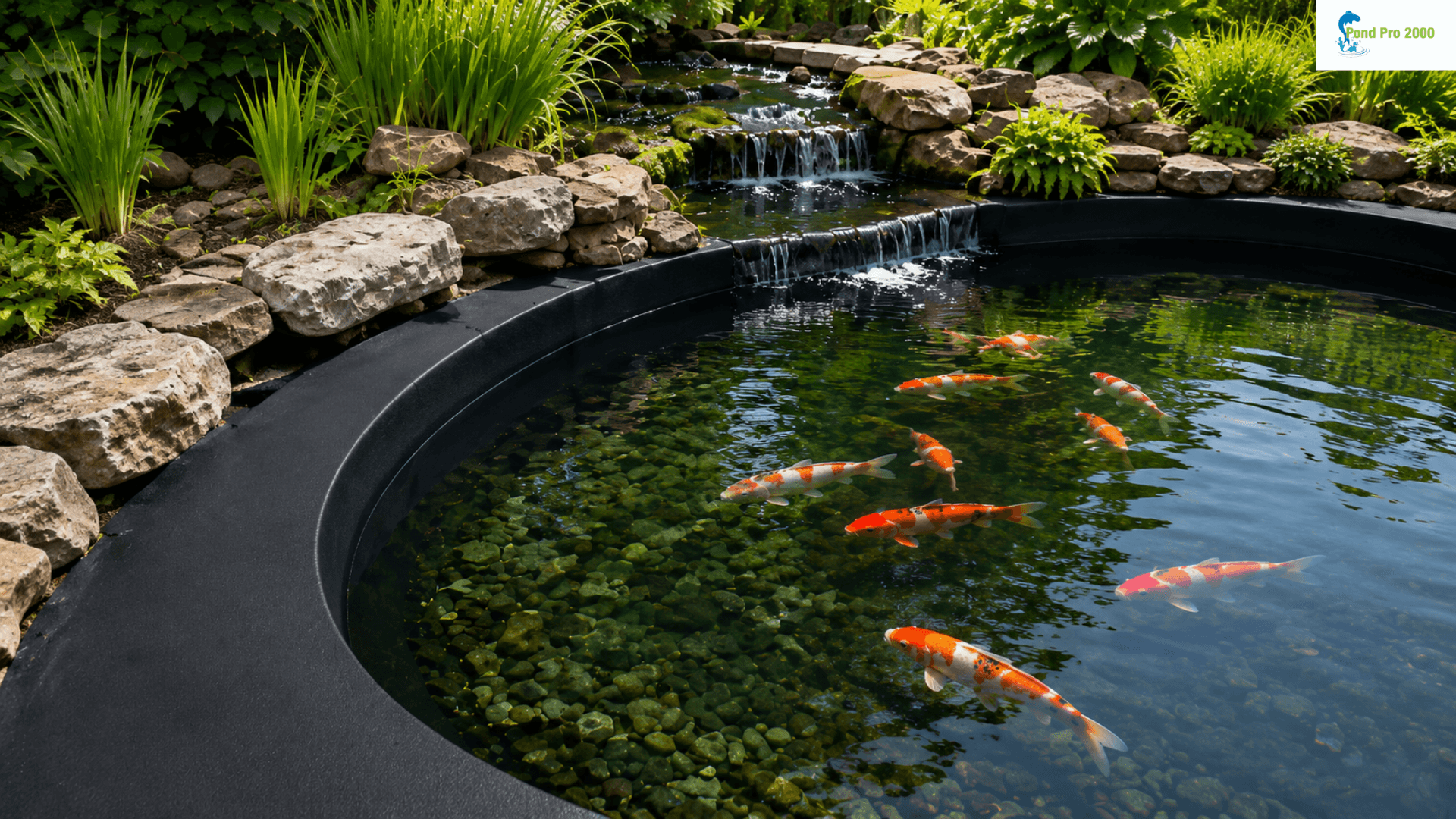
A Practical Way to Fix a Pond Leak
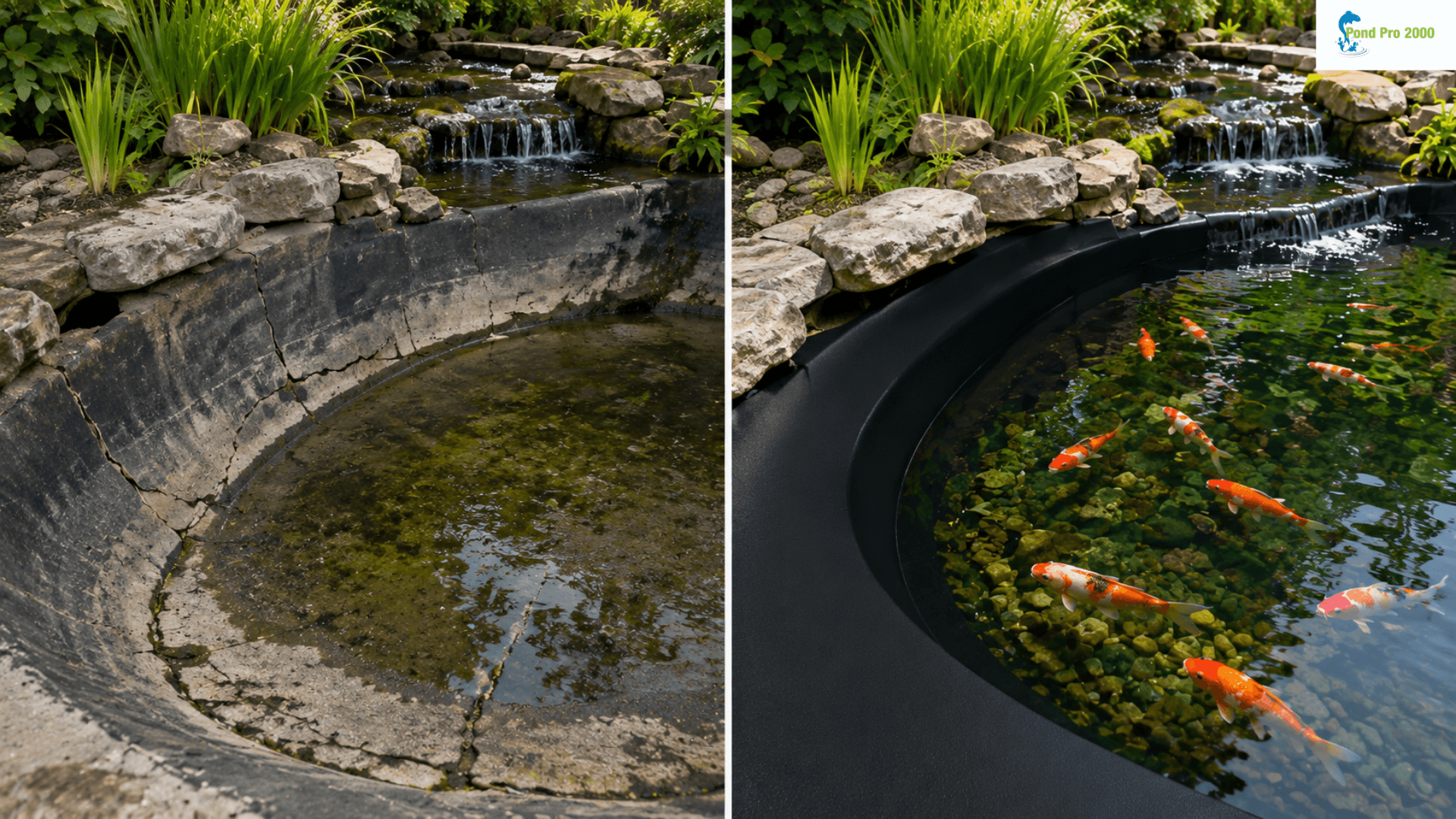
A leak does not always mean the pond needs to be demolished or completely relined. For compatible surfaces, Pond Pro 2000 offers a way to fix a pond leak by creating a flexible, waterproof membrane over the prepared area. It can be used on EPDM liners, concrete, fibreglass, acrylic, weathered vinyl, TPO, and several other approved surfaces.
The coating is UV = stable and designed to handle outdoor temperature changes, including seasonal freezing and thawing. Once correctly applied and fully cured, it provides a fish = safe surface suitable for ponds and water features.
The product still needs a sound foundation. It cannot compensate for severe structural damage, loose concrete, an incompatible PVC liner, or poor surface preparation. In most cases, the result depends just as much on cleaning, drying, measuring, and curing as it does on the coating itself. Finding a leak is never the enjoyable part of owning a pond. Still, a careful repair can save the water feature without forcing you to rebuild it from the ground up.
Take time to identify the likely source, confirm the pond material, prepare every surface properly, and follow the correct application process. The goal is not merely to keep the water level steady for a few weeks. It is to create a sealed, dependable pond so the fish and plants can be returned safely = and you can get back to enjoying it.