
DIY Pond Leak Repair: Best Methods for Keeping Your Pond Watertight
Let’s be real for a second. There is absolutely nothing more frustrating than stepping out into your backyard, coffee in hand, ready to enjoy the peace of your water feature, only to realize the water level has dropped again. You built this oasis to relax, not to give yourself a second full-time job.
Seeing your beautiful pond lose water triggers immediate panic. Your brain instantly jumps to worst – case scenarios: moving all the fish into temporary holding tanks, ripping up all the heavy landscaping stones, tearing out the old liner, and spending a small fortune to start from scratch. But hold on a minute. Don’t grab the shovel just yet.
DIY pond leak repair really doesn’t have to involve endless frustration, pulling your hair out, or writing a massive check to a local contractor. You can actually tackle the problem yourself, preserve your existing landscaping, and get the job done right the first time. You need to ditch the traditional methods that aren’t working and look at what actually permanently seals a leak.
The Absolute Nightmare of the Elusive Leak
Before you can fix anything, you have to face facts: finding the exact spot where a pond is leaking is like looking for a needle in a haystack. Sure, a little water loss during the dog days of summer is totally normal due to evaporation or a splashing waterfall. But if you find yourself dragging the garden hose out to top off the pond every single week? You’ve got a leak.
As older liners sit out in the elements, they take a beating. UV rays bake them, ice freezes them, and eventually they start to crack. Some folks get lucky and find one obvious hole, but many pond owners experience multiple tiny leaks at once. Sometimes the pond only leaks when the water hits a specific level or pressure point, making it even harder to track down.
There is honestly nothing more soul-crushing than spending an entire weekend draining the water, scrubbing the liner, and patching a hole, only to refill the pond and watch the water line drop right back down a month later. It’s an exhausting cycle.
Most people panic and run straight to the big box hardware store. They grab whatever cheap patch kit or basic marine caulk they see on the shelf and hope for the best. Here is the harsh truth: standard materials almost always fail when they are completely submerged underwater 24/7. They just aren’t built to handle constant water immersion mixed with the sun’s harsh UV rays and freezing winter temperatures.
Why Traditional Fixes Are Usually a Waste of Time
If you’ve ever looked into standard repair methods, you probably realized how extremely complicated they are. Most traditional pond sealants require you to jump through a ridiculous number of hoops just to get started.
Usually, the instructions tell you to scrub down the liner, apply a harsh, toxic primer, let it cure, brush on a thick base coat, wait again, and then finally roll on a topcoat. Who has time for that? Not only is it a massive drain on your weekend, but you are also constantly racing against Mother Nature. Imagine spending two days prepping and painting a coating that takes days to dry, only to get hit with a surprise rainstorm that washes your hard work – and your money – right down the drain.
On top of the weather issues, many traditional coatings refuse to stick to certain surfaces. Older EPDM liners, weathered vinyl, and bare concrete can be incredibly stubborn. If the chemical makeup of the sealant isn’t exactly right, it sits on top of the surface like a piece of tape. Eventually, water gets underneath, and it flakes right off. You end up right back at square one. You need a product that actually forms a permanent chemical bond with the surface itself.
The Game – Changing DIY Fix
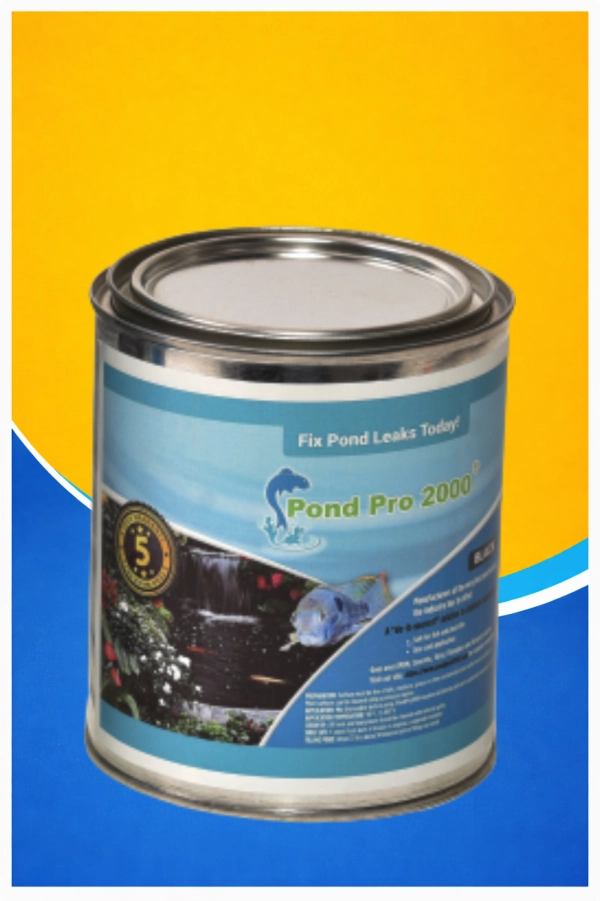
So, how do you actually keep your pond completely water-tight without losing your mind in the process? The absolute best approach is to use a high-quality liquid rubber coating. And if you want to do it right, you need pond pro 2000.
This stuff is a total game-changer for anyone dealing with stubborn, hard-to-find leaks. Why does it work so much better than the buckets of tar or acrylic at the hardware store? It all comes down to the chemistry. This formulation is based on a highly flexible Butyl/Polyether chemistry. In plain English: it is 100% butyl rubber in a liquid, solvent – based form.
This specific makeup allows the product to stretch and adhere in ways designed for total water immersion. During the drying process, a built-in catalyst physically forces out trapped air and creates a chemical cross-link. It doesn’t just sit on the surface; it chemically bonds to it.
Whether you are dealing with an aging EPDM membrane, bare concrete, fiberglass, acrylic, weathered vinyl, or a TPO liner, it bonds brilliantly to all of them. It’s even the go-to choice for concrete storage tanks and reflecting pools. And here is a huge bonus: if you previously tried a different coating on your EPDM pond and it failed miserably, you don’t even have to strip it all off. You can apply this straight over the top of the failed coating.
Why This Beats Everything Else Out There
There are a few massive advantages to using a premium liquid pond liner instead of rolling the dice with standard patch kits. Let’s break down exactly why this method takes the headache out of pond repair:
- One-Coat Application: Your time is valuable. You shouldn’t be spending days applying layer after layer. With this system, you only need one coat.
- Zero Primer Needed: This saves you serious cash and a ton of elbow grease. You apply it directly to your existing surface. No es el primer requerido.
- Crazy Fast Weather Resistance: You can actually recoat your pond in temperatures that cause other products to fail. As long as it is above 55 degrees out, this stuff waterproofs in just two hours! You don’t have to obsessively refresh the weather app, worrying that an afternoon shower will ruin your project.
- Handles Extreme Temperatures: Freezing and thawing cycles destroy basic pond liners because they expand and contract until they snap. This butyl rubber formula stays totally flexible. It handles brutal temperatures from a freezing – 62°F all the way up to a blistering 350°F. It is also 100% UV stable so that the sun won’t bake it to pieces.
- Totally Safe for Fish: If you keep koi or goldfish, their safety is the biggest priority. You can’t just dump industrial chemicals into their home. Once this product is cured, it is completely safe for fish, plants, frogs, turtles, and whatever else calls your pond home.
Getting Your Hands Dirty: The Step – by – Step
Fixing your pond really should be a DIY job. You don’t need heavy machinery or a specialized degree to figure this out. The process is refreshingly simple.
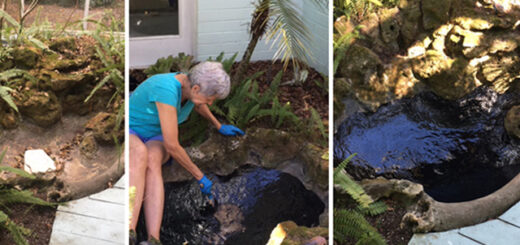
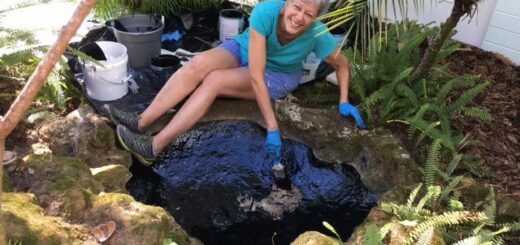
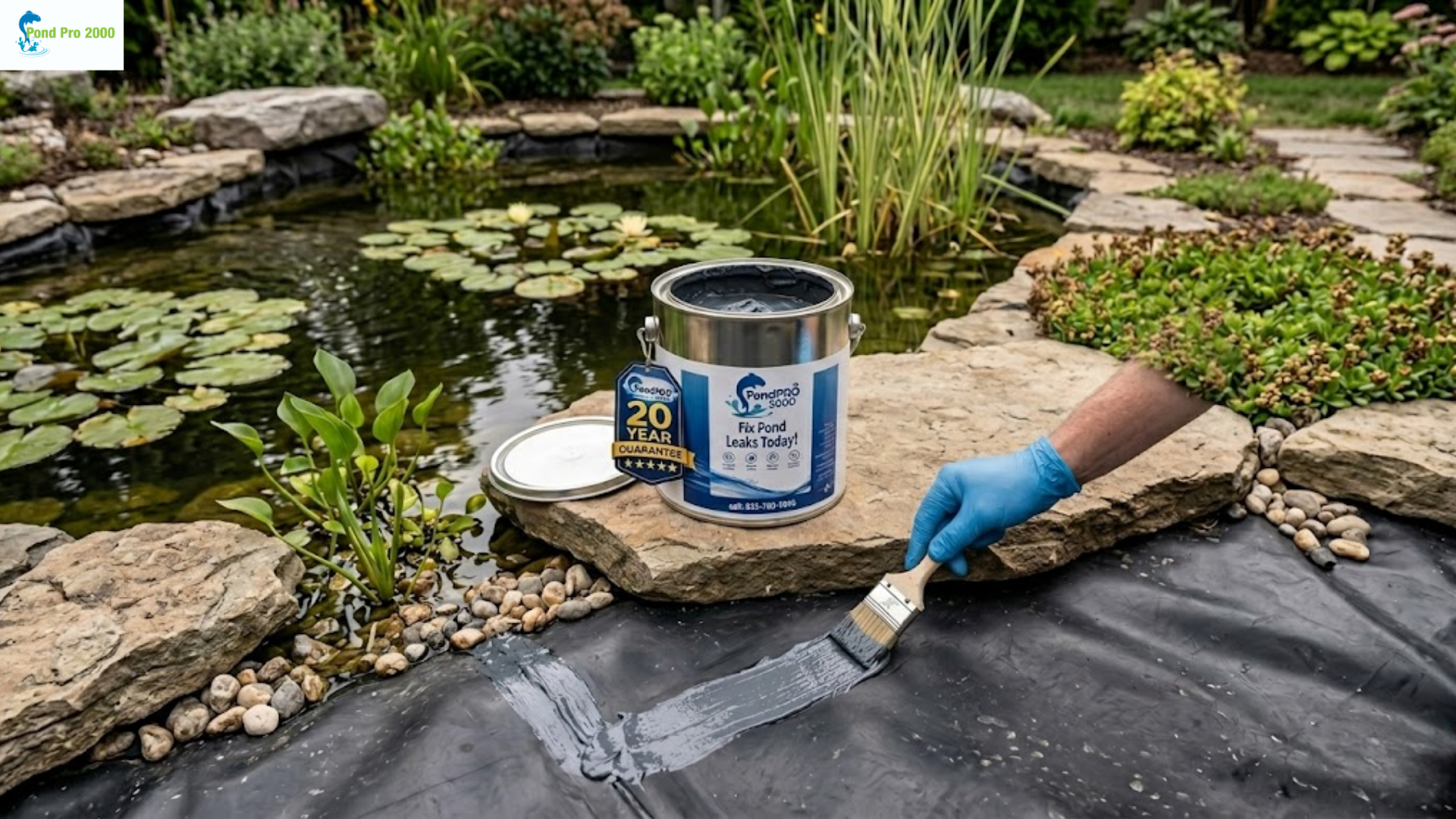
First, give the surface a decent clean. You don’t need primer, but you do need to remove the heavy muck, algae, and loose debris. If your pond is made of concrete or fiberglass, or if you are working on a brick fountain, grab your brush or roller and apply the main coat directly to the surface. It goes on smoothly and starts bonding immediately.
If you are putting it over an existing rubber EPDM liner, there is one tiny difference, but it’s still super easy. You start by putting down a very light, thin first coat – this is called a “flash coat.” Now, don’t freak out if you can still see the original liner showing through in spots. That is totally normal. Let that flash coat dry for about 3 hours. Once that’s done, go ahead and roll on your main, thicker coat.
You can choose between crisp white or classic black to match your aesthetic. At temperatures above 55 degrees, the whole thing is completely dry in about 4 to 5 hours.
Do It Once and Forget About It
When you put in the effort to fix a leak, you expect it actually to stay fixed. Nobody wants to be re-patching the same spot next spring. The sheer longevity of this butyl rubber is unmatched. It has proven time and time again to be vastly superior to acrylics, urethanes, and other elastomers, lasting up to three times longer than those cheap alternatives.
By taking an afternoon to apply this one-coat system, you are easily adding another 10 to 15 years to your water feature. Just imagine not having to stress over water levels for over a decade. The manufacturer is so confident in this that they back it with a 20 – year warranty – the only 20 – year warranty you’ll find in the industry. Plus, the product itself has a 20-year shelf life. If you have leftovers, slap the lid on tight, and it’ll be waiting in the garage if you ever decide to build a second pond down the road.
Dealing with a dropping water line doesn’t mean your pond is doomed, and it definitely shouldn’t mean draining your bank account. Stop wasting time with multi-step sealants that wash away in the rain or peel off after a few months. Grab a true pond sealant, lock out the leaks permanently, and get back to actually enjoying the peaceful backyard oasis you worked so hard to build.